
■ Quick Answer
Bleeding gums when flossing almost always means your gums are inflamed — not that flossing is hurting you. The fix is more flossing, not less. Most people see the bleeding stop completely within 14 days of daily flossing.
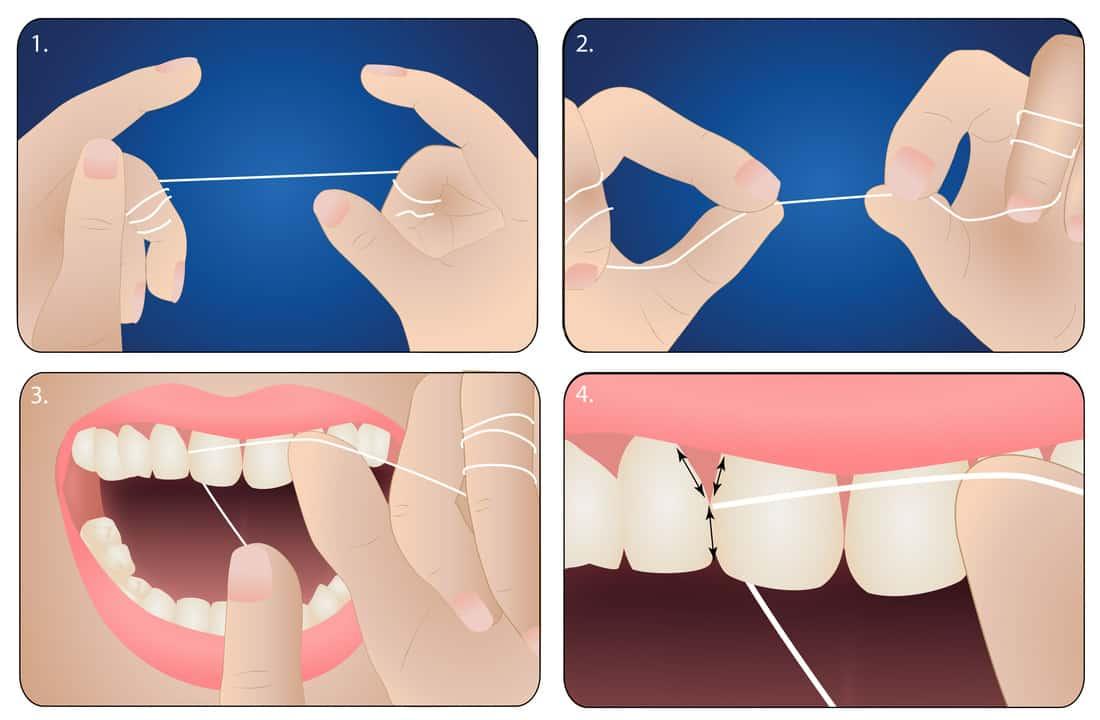
Correct flossing technique — a C-shape around each tooth, gentle pressure under the gumline.
Why Flossing Makes Your Gums Bleed
When plaque bacteria accumulate along the gumline, the gum tissue becomes inflamed — a condition called gingivitis. Inflamed gum tissue is fragile and has an increased blood supply. When floss disturbs this tissue, it bleeds. The floss is not the problem; it is revealing a problem that was already there. If you only floss occasionally, the inflammation never gets a chance to resolve. Daily flossing allows the inflammation to reduce, the gum tissue to tighten, and the bleeding to stop.
When Should You Be Concerned?
Occasional bleeding that resolves within 1–2 weeks of daily flossing is normal and expected. Book an appointment if: bleeding persists beyond 14 days of daily flossing; your gums are swollen, red, or receding; you notice bad breath that doesn’t improve; or you are on blood-thinning medication. According to the CDC, 47% of adults over 30 have some form of gum disease — most are unaware because bleeding gums are often painless.
Healthy gums don’t bleed. Consistent daily flossing is the most effective way to restore gum health.
The Correct Flossing Technique
Use 40–45cm of floss, winding most of it around your middle fingers. Guide the floss between teeth using your thumbs and index fingers. Curve the floss into a C-shape around each tooth and slide it gently under the gumline — do not snap or saw. Use a fresh section of floss for each tooth.
Frequently Asked Questions
Q: Is it normal for gums to bleed every time I floss?
A: If you floss infrequently, yes — initially. But if you’re flossing daily and still bleeding after 2 weeks, that is not normal and you should see your dentist.
Q: Can I use a water flosser instead?
A: Water flossers are a good supplement, especially for braces or implants, but they do not remove plaque as effectively as traditional floss. Use both if possible.
Q: Will mouthwash help stop the bleeding?
A: An alcohol-free CPC mouthwash can help reduce bacteria and speed up inflammation resolution, but it does not replace flossing.
If your gums are still bleeding after 2 weeks of daily flossing, book a professional clean at Kings Family Dental. Tartar below the gumline can only be removed by a hygienist.
Published by Kings Family Dental | Gum Health & Prevention